Wednesday, 13 May 2009

Design Model - statement


Literature Review


As my literature review has come to its current end on Mental Models I will now, over the next week, use this blog and my PhD Project Blog as a sounding board to synthesise all the cognitive science research I've engaged in since February. The forthcoming posts will hopefully inform a paper that will theoretically under-pin my first practical design project as part of my PhD. Please feel free to comment and make suggestions as I shape my understanding of Mental Models from a visual communication perspective. The main cognitive literature I have read and will use can be found at the bottom of this post. I will list the embodied cognition literature in a separate post.

Design Model


My desire is to creatively experiment through interactive design prototyping what Donald Norman describes as the Design Model. This is a designer's cognitive model of how an interactive product's functionality can be visually, spatially and temporally represented so that a user can operate the interactive product. The Design Model, a conceptual visualization on the designer's part, helps solicit the correct design choices to allow a user to use and experience the interactive product easily. The interactivity of the product is architectured in such a way to be implemented through coding and algorithms. This mechanistic programming of interaction may be HOW the product works, but the user won't understand how a product works from an implementation perspective.

User's Cognition


Users understand that an interactive product has to be experienced, and that causality affords decision-making as to how to use a product. Through cause and effect, prior experience and varying degrees of cognitive problem-solving, user's individually discover their method for understanding how to use the product. User's may all be able to use the same interactive product, but if asked HOW it works they will not be able to explain it based upon how implementally it was coded. They each will approximate a model of HOW they understand it works. As the cognitive science literature points out this user model will probably be fallacious, inferred, deduced, inaccurate and contradictory; but by constructing the cognitive model the user reasons how to use the interactive product. This user cognitive model is referred to as a user's Mental Model.

Objective


In my posts I will unpack these cognitive models in order to understand how to improve understanding of the Design Model in order to add to the sparse literature within interaction design and visual communication disciplines. Firstly I will process the cognitive science literature on mental models to ground myself in understanding HOW a user processes causal information. I will then post, as an alternative cognitive perspective, on how embodied cognition may view the same subject. Throughout I will be expanding upon what has been written about the Design Model.

Terminology


To end I just need to clarify my use of the terminology regarding Design Model. As with any subject that sits across disciplines people arrive at the same or similar concepts using different terminology. In trying to avoid a taxonomic history I will keep things simple. Norman uses the term design model (Norman, 1998) whilst interaction designer Alan Cooper calls it a representational model (Cooper et al, 2008). Cooper also refers to Norman's term as a designer's model. An earlier term from the Eighties used in the context of a designer was a "UCM" or user's conceptual model (Young, 1983).

To keep things simple within my research I will now only use Norman's term Design Model. I choose Norman's term as it is the simplest term to describe what all three describe, and a term that is devoid of personal individual ownership.

References:


COOPER, A., REIMAN, R. and CRONIN, D. (2007) About Face 3: The Essentials of Interaction Design. Indianapolis: Wiley Publishing Inc.

CRAIK, K.J.W. (1943) The Nature of Explanation. Cambridge: Cambridge University Press

de KLEER, J. and SEELY BROWN, J. (1983) Assumptions and Ambiguities in Mechanistic Mental Models. In D. GENTNER, and A.L. STEVENS, eds. Mental Models. Lawrence Erlbaum Associates Inc. pp155-190

GENTNER, D. and STEVENS, A.L. (1983) Introduction. In D. GENTNER, and A.L. STEVENS, eds. Mental Models. Lawrence Erlbaum Associates Inc. pp1-6

GENTNER, D. & GENTNER D.R. (1983) Flowing Waters or Teeming Crowds: Mental Models of Electricity. In D. GENTNER, and A.L. STEVENS, eds. Mental Models. Lawrence Erlbaum Associates Inc. pp99-129

JOHNSON-LAIRD, P.N. (1983) Mental Models. Cambridge: University Press.

MARR, D. (1982) Vision: A Computational Investigation into the Human Representation and Processing of Visual Information. New York: W.H. Freeman and Company.

NORMAN, D.A. (1983) Some observations on Mental Models. In D. GENTNER, and A.L. STEVENS, eds. Mental Models. Lawrence Erlbaum Associates Inc. pp7-14

NORMAN, D.A. (1998) The Design of Everyday Things. MIT Press

PREECE, J., ROGERS, Y., SHARP, H., BENYON, D., HOLLAND, S., & CAREY, T. (1995) Human-Computer Interaction. Addison-Wesley Publishing Company

PREECE, J., ROGERS, Y. & SHARP, H. (2002) Interaction Design: Beyond Human-Computer Interaction. John Wiley & Sons, Inc

SPOOL, J. (2008) SpoolCast: Reviewing Mental Models with Indi Young [online]. [Accessed 13 May 2008]. Available from World Wide Web: [Podcast]

VARELO,J., THOMPSON, E. and ROSCH,E. (1996) The Embodied Mind: Cognitive Science and Human Experience. Cambridge, Mass.: MIT Press

WILLIAMS, M.D., HOLLAN, J.D. and STEVENS, A.L. (1983) Human Reasoning About a Simple Physical System. In D. GENTNER, and A.L. STEVENS, eds. Mental Models. Lawrence Erlbaum Associates Inc. pp131-153

YOUNG, R.M. (1983) Surrogates and Mappings: Two Kinds of Conceptual Models for Interactive Devices. In D. GENTNER, and A.L. STEVENS, eds. Mental Models. Lawrence Erlbaum Associates Inc. pp35-52

YOUNG, I. (2008) Mental Models: Aligning Design Strategy with Human Behavior. Rosenfeld Media

Thursday, 7 May 2009

Paper abstract accepted for International Design Research Conference in South Korea (revised post)

The abstract for my paper "Interaction Design: Where's the Graphic Designer in the Graphical User Interface?" has been accepted for entry into IASDR 2009 in Seoul in October. The International Design Research conference brings together "top design researchers and practioners to build and advance knowledge in the field of Design."

I've just uploaded my full paper for the next selection phase so I'll post more information as soon as I know. The next phase will be announced in August.

Wednesday, 22 April 2009

Mental Models: Aligning Design Strategy with Human Behavior

I will be posting again soon with my theorising upon mental models and designers models. I am just completing my literature review and the next stage will be processing the theory and synthesising it to a visual communication application. Just as I am pulling the last main sources (see PhD project blog) I found this new book which may provide a missing bridge between cognitive science and design.

Young, I. (2008) Mental Models: Aligning Design Strategy with Human Behavior. Rosenfeld Media


I have also located a set of papers on embodied cognition too which I need to read. There is a good reading list available from this link. I have downloaded some of the papers already, but if Mark could let me know if there are any he would recommend that would be great.

Thursday, 26 March 2009

1st Practical PhD Project… thoughts

On my project blog PhD Project 01 I am still documenting research upon the cognitive psychology of users' mental models which will take me into April as I need to source a couple of key texts I couldn't get from ECA's or University of Edinburgh's libraries. That said one key text yesterday, firmly situated within cognitive science literature, has suggested a structure for my practical research project. I will expand upon this again over the coming months in more detail.

The idea so far in its embryonic state is this…

    Phase
  1. Qualitative Experiment on up to 36 subjects to undergo an initial online survey to identify a capacity to describe and communicate a cognitive model (subject to be defined). The subjects who can clearly communicate their 'mental model' will be graded into study groups for the next phase.
  2. This study group will then be asked to explain how they understand how they perform an interactive task.
  3. These 'mental models' will be visually documented.
  4. From this documentation visual interactive prototypes will be produced as iterative tests of a 'designer's model'.


I do realise that this is very woolly right now and lacks definition. It's root is in an experiment performed by Dedre Gentner and Donald R. Gentner disseminated in their 1983 paper "Flowing Waters or Teeming Crowds: Mental Models of Electricity". My outcome will be demonstrably different to theirs, but their method is certainly a foundation to develop on. I will continue to work on this planning over April.

To summarize though what my intended outcome will focus upon: it will be creating a range of interaction prototypes that are define and designed using 'designer models' interpreting users' 'mental models' of the interaction. The outcome will be focused on visually communicating the experimentations of matching an interface design to how a user thinks it works rather than how it works.

I know I can communicate this better, so please bear with me as I begin to form my methodology and outcomes. Any comments would be greatly received, but please add them to this post by clicking 'Comments' rather than emailing them. Once I have the project more defined I will utilise the Interaction Design community www.ixda.org to inform me of any similar experiments, to ensure I am doing and experiment that will open new ground.

The final thing I need to emphasize is that this project will focus on the visual communication of the interactive process.

Reference:

Gentner, D. & Gentner D.R. (1983) Flowing Waters or Teeming Crowds: Mental Models of Electricity. In D. GENTNER, and A.L. STEVENS, eds. Mental Models. Lawrence Erlbaum Associates Inc. pp99-129

Wednesday, 25 March 2009

UCM or UMM? Let IxDA decide?

I have been heavily reading into cognitive science and 'mental models' (see PhD Project 01 blog) with the help and advice of the members of the Interaction Design Association. I have now made 3 posts to their discussion lists and have made contact with Alan Cooper, the writer of About Face 3. My latest post I duplicate here as you need to be a member to be in the discussion.

I have just placed this into the cue for circulation so hopefully I will get some responses and therefore will eventually add these here. I post this message here to solicit a wider response, so please if you can advise post a comment to this blog.

Original post:
"Following on from my previous posts I am researching into what Don Norman calls 'designer's models' and Alan Cooper calls 'represented models'. In doing so I'm reading the literature on 'mental models' (Thanks to Alan Cooper, Vicky Teinaki, J. Ambrose Little, Francis Norton and Alan James Salmoni). I came across Richard Young's essay in Gentner and Steven's 'Mental Models', in which he discusses UCMs: "User's Conceptual Models".

Can anyone in the community advise whether Young's UCMs were an early incarnation of what becomes defined as 'User's Mental Models' or a separate area of research? Any comments would benefit me from maybe wasting time on a tangential research cul-de-sac.

Thanks"

Friday, 20 March 2009

IxDA Basecamp

I've just been invited to join the IxDA Basecamp, an offshoot of the Interaction Design Association where interaction designers can "collaborate on IxDA Basecamp projects. You can post messages and comments about your work here for the group to see." I've just posted the following announcement on the group at http://ixdg.grouphub.com/projects/1622075/project/log. You will need to join the association to view it. I am now officially a 'group leader'.

Interaction Design from a visual communication perspective

Hi IxD community,

I’m Dave Wood a lecturer in Interaction Design from the UK. I’m based in Liverpool and I’m engaged in part-time doctoral study at Edinburgh College of Art on a practice-based PhD.

Between now and 2013 I will be researching interaction design from a visual communication perspective. In doing so I will design and run three design projects to test and measure my research. I would welcome any comments and input from the IxD community.

I have two blogs that disseminate my research and a paper entitled “Interaction Design: Where’s the Graphic Designer in the Graphical User Interface?” available from my academia.edu profile. Feel free to view any of these, the links are:

newmediabazaar.blogspot.com/
phdproject01.wordpress.com/
sthelens.academia.edu/DaveWood

Now that I am a member of this group I will also disseminate my research and project progress here.

Sunday, 15 March 2009

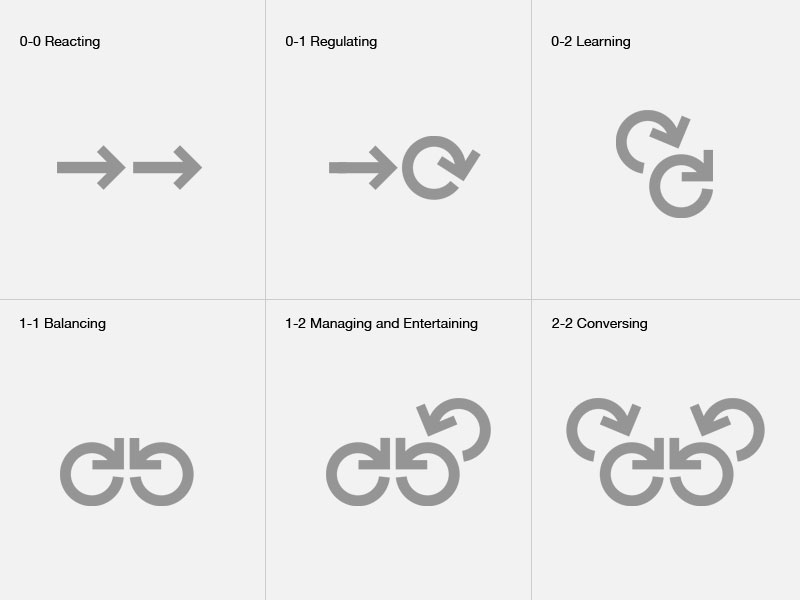
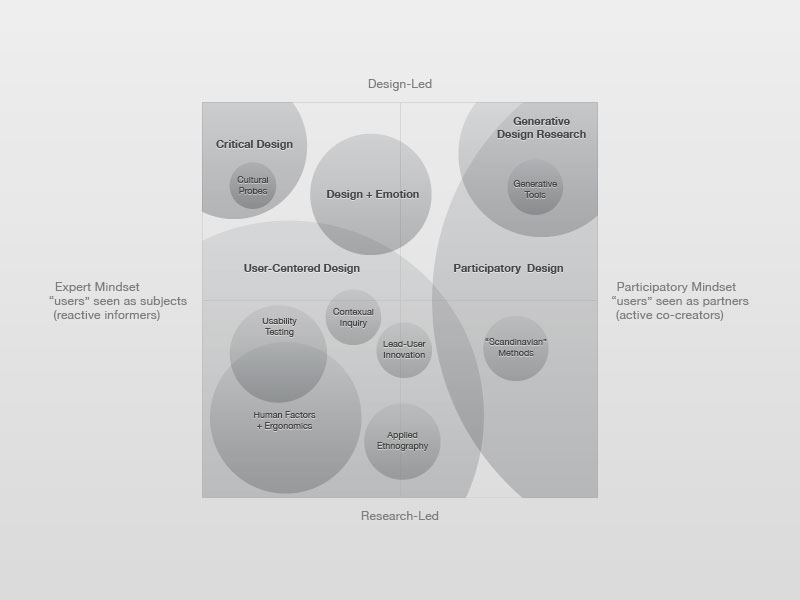
Interactivity and Design Research Diagrams

I've come across these two illustrations whilst researching cognitive models that will come in handy at some point.


What is Interaction?
www.dubberly.com/articles/what-is-interaction.html


An Evolving Map of Design Practice and Design Research
www.dubberly.com/articles/an-evolving-map-of-design-practice-and-design-research.html

Wednesday, 11 March 2009

1st PhD Practical Project

After a rewarding tutorial with Simon Biggs last week at ECA I am reinvigorated and refocused. A result of this meeting Simon suggested it is time I started planning my first practical project to test the theory I am reading against. This practical project would become my MPhil project and the transition into the PhD. It will span 2009 and 2010 and will focus upon my most recent area of interaction design research - mental models. I will start to unpack this idea at my next whiteboard tutorial with Chris Speed and Mark Wright next week. Simon and I agreed that my annual review should be in June and that I should prepare my project proposal for that review.

To be able to focus upon that project I have set up my first PhD Project Blog. This is a sub-blog to this main research blog and I will cross-post between the two. I will use that blog to explore the research literature into user mental models and represented (designer's) models, as well as using it to post my visual concepts, tests and evaluation.

The new blog can be found at http://phdproject01.wordpress.com/.

Monday, 2 March 2009

Why Do We Need Doctoral Study in Design?

I picked up this link to the following paper from an email from the Interaction Design community.
Why Do We Need Doctoral Study in Design? by Meredith Davis of North Carolina State University, North Carolina, USA.

Due to the death of a close family member in January I feel I have lost some research momentum. I have been doing a lot of reading, note-taking and annotating but of course I am not seeing any reward of application yet. It was in this context that I thought this paper could help to contextualise and re-focus what I should be doing.

The paper was US-focused and on reading it I found that the sections I found really useful were pages 1 - 4: Introduction and New Paradigms for Design Practice. After this the paper analyzes the results of a study which began to lack direct relevance for me.

In the bibliography I found five further sources to read that I will soon source (see below). I will add this paper to my annotatedBib blog soon and record its main relevances for future reference. Here I will simply list for now some of the main points of interest to me from these five sources.

Toward a model of innovation by H. Dubberly (2008) presents an organic, system-based approach to design thinking that shifts the process of design to experience away from objects. In doing so the scope of design influence can broaden "within larger and more complex social, cultural, physical, economic and technical systems."

Everyware: The dawning age of ubiquitous computing by A. Greenfield (2006) may prove beneficial as some background reading.

Convergence culture: Where old and new media collide by H. Jenkins (2006)is cited in connection with how "peoples sense of agency or control of outcomes" is a consequence of media convergence. I have read Henry Jenkins previous paper on narrative architecture that will prove useful in the future.

Design methods: Seeds of human futures by C. Jones (1970) discusses the hierarchy of design problems, and that "design action must address an intricate web of connections among people, activities, objects and settings."

Acting with technology: Activity theory and interaction design by Nardi and Kapetlinin (2006) may prove interesting. But right now I will hold judgment until I have read it fully. The reason I say this is that Davis (2008) summarizes the position of activity theory, and ends with a statement "our research strategies have to go beyond testing actions and operations in human factors labs and asking questions in focus groups that separate people from the settings in which relevant behaviour takes place". I wish to turn to the source to clarify the actual relevance of activity theory on interaction design.

References

DAVIS, M. (2008, Dec 31) Why Do We Need Doctoral Study in Design?. International Journal of Design [Online] 2:3. Available: http://www.ijdesign.org/ojs/index.php/IJDesign/article/view/481/223

DUBBERLY, H. (2008) Toward a model of innovation. Interactions, 15(1), pp. 28-36.

GREENFIELD, A. (2006) Everyware: The dawning age of ubiquitous computing. Berkeley, CA: New Riders.

JENKINS, H. (2006). Convergence culture: Where old and new media collide. New York: New York University Press.

JONES, J. C. (1970). Design methods: Seeds of human futures. New York: Wiley-Interscience.

NARDI, B., & Kapetlinin, V. (2006). Acting with technology: Activity theory and interaction design. Cambridge, MA: MIT Press.

Sunday, 1 February 2009

Gillian Crampton Smith links

"Interaction design is the creative design of the interaction between people and devices, systems or services. This interaction usually involves the ‘new technologies’ of computing and communications. But interaction design remains a design activity – like architectural, graphic or product design. And it concerns the social value and cultural meaning of what is designed, not only its functional efficiency and visual appeal." Gillian Crampton Smith and Philip Tabor 2007-08
http://www.interaction-venice.com/index.html

Through some research on designers of interfaces on Google Images I followed some Gillian Crampton Smith links to Crampton Smith and Philip Tabor's website. On it they have a reading lists for Interaction Design, Information Visualisation and other useful links which I reproduce here in order to archive them for future quick reference.

======

From http://www.interaction-venice.com/references-introductory.html

Introductory references

Strongly recommended

Bonsiepe, Gui. 1995. Dall’oggetto all’interfaccia. Mutazioni del design. Milan: Feltrinelli. (English trans: Interface: An Approach to Design. Maastricht: Jan van Eyck Akademie.)

Moggridge, Bill. 2007. Designing Interactions. Cambridge: MIT Press.

Negroponte, Nicholas. 1995. Being Digital. New York: Alfred A. Knopf.
2004. Essere digitali. Milano: Sperling and Kupfer

Norman, Donald A. 1997. La caffettiera del masochista. Psicopatologia degli oggetti quotidiani. Florence: Giunti. (Trans. of The Psychology of Everyday Things. New York: Basic Books. 1988.)

Reas, Casey, and Ben Fry. 2007. Processing: A Programming Handbook for Visual Designers and Artists. Cambridge: MIT Press.

Saffer, Dan. 2006. Designing for Interaction: Creating Smart Applications and Clever Devices. Berkeley CA: Peachpit.

Thackara, John. 2006. In the Bubble: Designing in a Complex World. Cambridge MA: MIT Press.

White, Ron. 2004. Il computer. Come è fatto e come funzione, 7th edn. Milan: Mondadori. (Trans. of How Computers Work. Indianapolis: Que. 2006.)

Recommended

Botta, Massimo. 2006. Design dell’informazione. Tassonomie per la progettazione di sistemi grafici auto-nomatici. Trento: Artimedia.

Cameron, Andy, ed. 2004. The Art of Experimental Interaction Design (IdN Special O4). Hong Kong: IdN Publishing.

Caplin, Steve. 2001. Icon Design: Graphic Icons in Computer Interface Design. New York: Watson-Guptill.

Cooper, Alan, Robert Reimann, and David Cronin. 2007. About Face 3.0: The Esssentials of Interaction Design. New York: Wiley.

Cooper, Alan. 1999. Il disagio tecnologico. Perché i prodotti high-tech sono così difficili da usare e che cosa fare per migliorarli. Milan: Apogeo. (Trans. of The Inmates are Running the Asylum: Why High Tech Products Are Driving Us Crazy and How to Restore the Sanity. Indianapolis: Sams. 1999.)

Garito, Maria Amata, Giovanni Anceschi, and Massimo Botta. 2006. L’ambiente dell’apprendimento. Web design e processi cognitive. Milan: McGraw-Hill.

Maeda, John. 2004. Creative Code: Aesthetics and Computation. London: Thames & Hudson.

Norman, Donald A. 1995. Le cose che ci fanno intelligenti. Il posto della tecnologia nel mondo dell'uomo. Milan: Feltrinelli, Milano, 1995. (Trans. of Things that Make Us Smart: Defending Human Attributes in the Age of the Machine. Reading MA: Addison-Wesley. 1993.)

Petzold, Charles. 2000. Codice. Il linguaggio segreto dei computer. Milan: Mondadori. (Trans. of Code: The Hidden Language of Computer Hardware and Software. Redmond WA: Microsoft Press. 1999.)

Preece, Jenny, Yvonne Rogers, and Helen Sharp. 2007. Interaction Design: Beyond Human-Computer Interaction, 2nd edn. New York: Wiley. (Italian trans. of 1st edn: Interaction Design. Milan: Apogeo. 2004)

Studio 4.5 (Carola Zwick, Burkhard Schmitz, and Kerstin Kuhl). 2006. Designing for Small Screens: Mobile Phones, Smart Phones, PDAs, Pocket PCs, Navigation Systems, MP3 Players, Game Consoles. Switzerland: Ava.


======

From http://www.interaction-venice.com/references-infoviz.html

Information visualisation references

INFORMATION DESIGN BOOKS

Bertin, Jacques. La Semiologie Graphique.

Tufte, Edward R. 1983. The Visual Display of Quantitative Information. Cheshire CT: Graphics Press.

- 1990. Envisioning Information.
- 1997. Visual Explanations
- 2006. Beautiful evidence

ICON DESIGN BOOKS

Caplin, Steve. 2001. Icon Design: Graphic Icons in Computer Interface Design. New York: Watson-Guptill.

INFORMATION VISUALISATION LINKS
Periodic Table of visualisation techniques
http://www.visual-literacy.org/periodic_table/periodic_table.html

Gallery of network visualisations
http://www.visualcomplexity.com/vc/

Information aesthetics
http://infosthetics.com/

Nice magnifying list (Jonathan Harris)
http://tenbyten.org/10x10.html

Jonathan Harris’s site
http://www.number27.org/

David Lu’s projects
www.velluminous.org
http://velluminous.org/portfolio/detail/?14

Visualising conversations:
(Boris Muller)
http://www.forestandthetrees.com/findr/findr.html
(Mike Migurski)
http://backchannel.stamen.com/

Semantic links between websites (only still pix at the moment)
http://www.ralphammer.de/projects/sinnzeug/sinnzeug_en.html

Power links between companies (Josh On)
http://www.theyrule.net/
(other work by Josh)
http://www.futurefarmers.com/josh/rca/index.html

Hyperbolic net visualisations
Visual thesaurus
Hypergraph - Hyperbolic graphs and trees : ThinkMap
KartOO visual meta search engine

Inxight: a spin off from Xerox Park from the visualization team of Stu Card
http://www.inxight.com/products/sdks/
Inxight StarTree
Inxight TimeWall
Inxight TableLens
(Inxight has been acqired by SAP. At present there are no pictures or demos on the site. Google 'hyperbolic visualisation' to find similar examples. 1/dec/2008)

Map of creativity
http://www.ngf.org.uk/map/map.html

Explore the Flikr space
http://www.quasimondo.com/tagnautica.php

World development statistics
G A P M I N D E R: HOME

Semantic Indexing
http://www.knowledgesearch.org/

Timelines (look at the live examples)
http://simile.mit.edu/timeline/

AT&T telecoms company’s visualisation research group
http://www.graphviz.org/Gallery.php

Overview of the stockmarket
www.smartmoney.com (look at Tools in the menu on the left)


======

From http://www.interaction-venice.com/references-useful-links.html

Useful links

GENERAL

Long running and important comment on ‘what is new technology for?’
http://www.doorsofperception.com/

Live|Work Service Design. Live|Work have pioneered service design as a design activity.
http://www.livework.co.uk/home.html

Interaction Design Association: a lot of interesting discusssions and resources
http://www.ixda.org/

Rather sharp blog on interaction design!
http://www.odannyboy.com/blog/archives/001000.html

Looks good, works well
Looks Good Works Well: Storyboarding Interesting Moments
http://looksgoodworkswell.blogspot.com/2005/11/interaction-matrix.html

We make money not art: design/technology/art
http://www.we-make-money-not-art.com/archives/009123.php

TECHNIQUES

Working with users
Cooper on personas (his company invented the name)
http://www.cooper.com/content/insights/newsletters_personas.asp

Working with users for service design
http://courses.interaction-ivrea.it/zoom/CirclesOfCare/index.html

IDEO’s methods cards
www.ideo.com/methodcards/MethodDeck/

Experience prototyping (Jane Fulton Suri, Marion Buchenau)
http://www.ideo.com/media/info.asp?x=6

Bill Gaver, Tony Dunne, Elena Pacenti: Cultural Probes
ACM Interactions Magazine February 1999
Flowcharting
Basic Flowcharting Symbols - The SmartDraw Flowchart Tutorial
Introduction to User Interface Flow Diagrams (UI Storyboards)

‘Quick and dirty’ video prototyping
http://insitu.lri.fr/imuseum/symposium1-results.html

Hill and Houde: "What do prototypes Prototype?"
http://www.viktoria.se/fal/kurser/winograd-2004/Prototypes.pdf

http://www.design.philips.com:80/about/design/section-13482/index.html

Information architecture tools
http://iainstitute.org/en/learn/tools.php

SOME NICE INTERACTIONS

Fresh interfaces for architects
http://www.intentionallies.co.jp/content_normal.html
http://www.andreescu-gaivoronski.com/and_gaiv.htm

Magical mystery tour
http://99rooms.terracontent.de/99rooms/99rooms.html

Flikr clock
http://www.quasimondo.com/clockr.php

Rijksmuseum: a beautiful light, delicate, pleasurable experience—a widget for the Macintosh
http://www.rijksmuseum.nl/aria/aria_assets/SK-C-210?lang=en

Elegant loading animation
http://www.sekisuiheim.com/desio-ae/

Animation sketch style
http://www.loworks.org/