Showing posts with label interactivity. Show all posts

Thursday, 26 March 2009

1st Practical PhD Project… thoughts

On my project blog PhD Project 01 I am still documenting research upon the cognitive psychology of users' mental models which will take me into April as I need to source a couple of key texts I couldn't get from ECA's or University of Edinburgh's libraries. That said one key text yesterday, firmly situated within cognitive science literature, has suggested a structure for my practical research project. I will expand upon this again over the coming months in more detail.

The idea so far in its embryonic state is this…

    Phase
  1. Qualitative Experiment on up to 36 subjects to undergo an initial online survey to identify a capacity to describe and communicate a cognitive model (subject to be defined). The subjects who can clearly communicate their 'mental model' will be graded into study groups for the next phase.
  2. This study group will then be asked to explain how they understand how they perform an interactive task.
  3. These 'mental models' will be visually documented.
  4. From this documentation visual interactive prototypes will be produced as iterative tests of a 'designer's model'.


I do realise that this is very woolly right now and lacks definition. It's root is in an experiment performed by Dedre Gentner and Donald R. Gentner disseminated in their 1983 paper "Flowing Waters or Teeming Crowds: Mental Models of Electricity". My outcome will be demonstrably different to theirs, but their method is certainly a foundation to develop on. I will continue to work on this planning over April.

To summarize though what my intended outcome will focus upon: it will be creating a range of interaction prototypes that are define and designed using 'designer models' interpreting users' 'mental models' of the interaction. The outcome will be focused on visually communicating the experimentations of matching an interface design to how a user thinks it works rather than how it works.

I know I can communicate this better, so please bear with me as I begin to form my methodology and outcomes. Any comments would be greatly received, but please add them to this post by clicking 'Comments' rather than emailing them. Once I have the project more defined I will utilise the Interaction Design community www.ixda.org to inform me of any similar experiments, to ensure I am doing and experiment that will open new ground.

The final thing I need to emphasize is that this project will focus on the visual communication of the interactive process.

Reference:

Gentner, D. & Gentner D.R. (1983) Flowing Waters or Teeming Crowds: Mental Models of Electricity. In D. GENTNER, and A.L. STEVENS, eds. Mental Models. Lawrence Erlbaum Associates Inc. pp99-129

Sunday, 15 March 2009

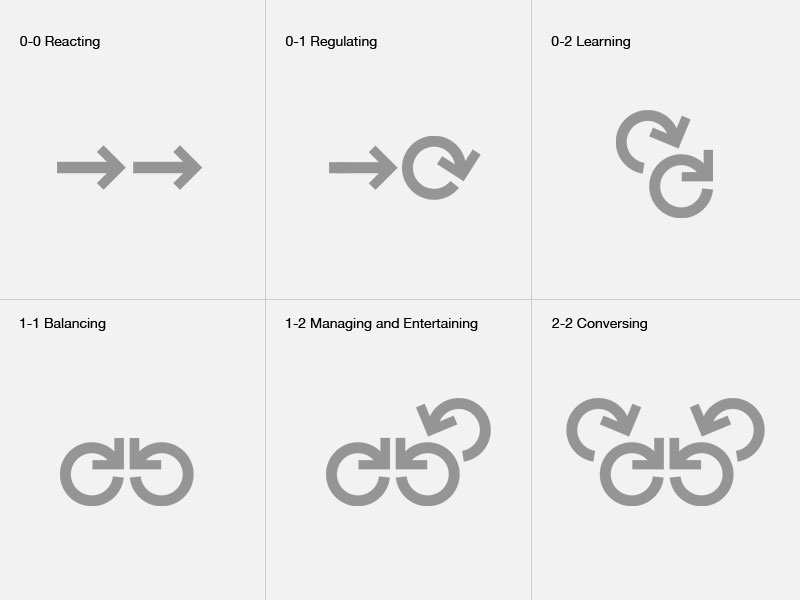
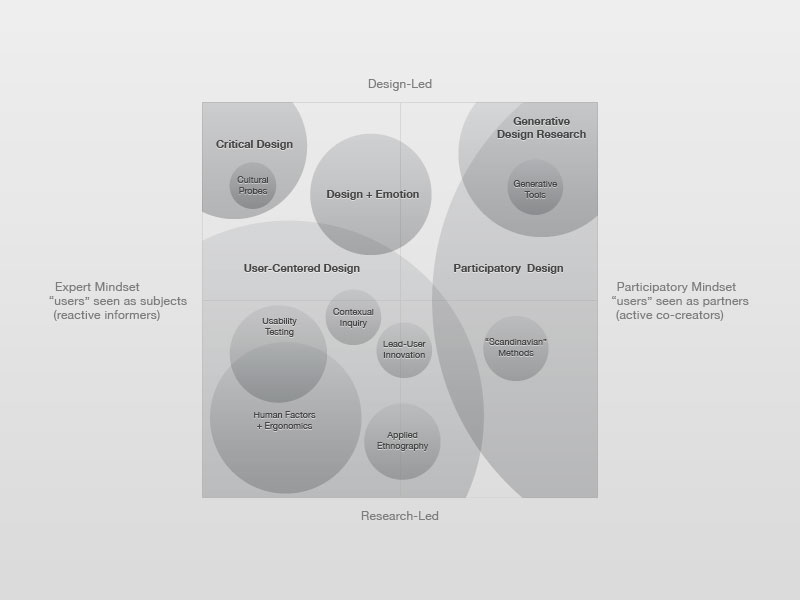
Interactivity and Design Research Diagrams

I've come across these two illustrations whilst researching cognitive models that will come in handy at some point.


What is Interaction?
www.dubberly.com/articles/what-is-interaction.html


An Evolving Map of Design Practice and Design Research
www.dubberly.com/articles/an-evolving-map-of-design-practice-and-design-research.html

Thursday, 25 October 2007

Explication

In expanding my previous post on All In The Mind about perception playing a part within interactivity I am re-reading Kiousis' paper "Interactivity: a concept explication" and here is my summary as I go through his thesis. I make no apologies for this post being a summary: just look on this post as watching me wrestle with attempting to explicate my own understanding of interactivity and in doing so help you to do the same.

Kiousis concerns himself with how theoretically and operationally interactivity should consensually be defined. In doing so he suggests that interactivity is a variable factor of media and psychology, and is affected by people's perceptions. Kiousis draws attention to the need to really agree what interactivity means before researching its many empirical studies of its effects. His paper attempts to do just that. He first discusses the assumptions made by researchers regarding their understanding of the term. Generally we are discussing interactivity in the context of new communication technologies (DeFleur and Ball-Rokeach, 1989) and, for most of the last 10 years, online (Lanham, 1993; Stromer-Galley, 2000). But, as Kiousis argues, interactivity is applied to empirically recorded conditions without actually considering what is meant by 'interactivity' in the first place. The term is ambiguous and I would argue suffers from the same problems as the words 'art' or 'artist'.

Everybody perceives they understand what 'art' and an 'artist' is, but in practice no-one can agree on a consensual definition (isn't that right Martin!). The problem with perceiving an understanding of the concept leads only to ambiguity, and that is not helpful. I am not after quantifying the unquantifiable but so far I applaud Kiousis' desire to reach a consensual definition. He acknowledges the term suffers from the many academic and professional perspectives and, like us all, he seeks to synthesize these into a coherent definition. Although communication technologies are often cited Kiousis has found the term has non-communication perspectives too. Therefore his literature review focuses upon the explicit meanings of interactivity due to the interdisciplinary nature of the sources of research.

Third-order Dependency
Referring back to the theme of my previous post Kiousis quotes S.J. McMillan, "while some scholars see interactivity as a function of the medium itself, others argue that interactivity resides in the perceptions of those who participate in the communication." (McMillan, 2000). It is this point of tension between medium and perception that I find fascinating. His review starts with 1940s Cybernetic Theory where interactivity is seen as an attribute of the communication channel where communication is seen as a "dynamic, interdependent process between senders and receivers." (Kiousis, 2002). But with the rise of New Media, Kiousis narrates that during the 1980s a new 'conceptual deliberation' was forged in the literature by S. Raffaeli and F. Williams (et al) into third-order dependency. Williams cites this as "the degree to which participants in a communication process have control over, and can exchange roles in, their mutual discourse is called interactivity" (Williams et al, 1988). Interactivity has "transfered from channel to message relationship" (Kiousis, 2002).

This aspect of third-order dependency ties nicely into the outline definitions I highlighted in my post on Semantics. Under the concept of third-order dependency the definitions of EXERTIVE (Heeter, 1989), INTERCHANGEABLE (Rice, 1984) & (Rogers, 1995) and TWO-WAY EXCHANGE (Rice and Williams, 1984) and (Rheingold, 1993) no longer appear to contradict each other. But is this as full a definition of interactivity as we can get? Kiousis sees this approach to interactivity as restrictive as it does not take into account modification as suggested by Steur as "the extent to which users can participate in modifying the form and content of a mediated environment in real-time". In the typology of interactivity this definition falls under a technological heading and can be judged effective through the functions of range, speed and mapping capabilities of the medium being used, whilst still giving the ultimate control to the user. But with control the user can use whatever controls they feel they need. No more. No less.

Range of Functionality
This does not make a new medium even more interactive if the user only uses the minimum of the functions. I have just upgraded my mobile to a Nokia N95 because it is the only phone I can view PDFs on. I didn't upgrade because I wanted a super-computer in a mobile with WiFI, 5m mega-pixel camera and a multimedia console all-in-one. I probably wont use a fifth of the phone's functionality over the next 18 months. I perceive I wont need them, so I wont use them. I am over-burdened by the range of functionality, therefore my approach to the medium's interactivity is psychological rather than functional.

Nokia N95

Heeter summarizes interactivity thus (Heeter, 1989) with my annotations drawing from the definitions listed in my Semantics post:

• Complexity of choice available (allocution)
• Effort the users must exert (exertive)
• Responsiveness to the user (two-way exchange)
• Monitoring of information use (registration)
• Ease of adding information (modification)
• Facilitation of interpersonal communication (conversational)

Information Speed and Timing
The exertive nature of the effort the user applies to the medium, together with the complexity of choice available must have a perceived response for the user. There is another argument that interactivity is the "extent to which the communicator and the audience respond to, or are willing to facilitate each other's communication needs" (Ha and James, 1998). Whether the response or facilitation is synchronous or asynchronous, dependent upon the speed of information flow through a system or the degree to which the user can control that rate in real-time response (synchronous) or delayed-response (asynchronous) as in email. Interactivity defined through a lens of communication sees itself as ascribing "human" characteristics.

When we communicate with/through an interactive system, whether we are communicating with another human or computer, we perceive this communication as an extension or simulation of our face-to-face communications. The common ground between speed of information and the timing between communications needs the difference between realness and interactivity to be clear, otherwise the boundaries between physical and mediated realities will be blurred. New Media's procedural and participatory environments are deemed the elements that make this media interactive (Laurel, 1991). Laurel has developed her understanding of interactivity toward a perceiver-based position. She sees interactivity occurring when "you either feel yourself to be participating in the ongoing action of the representation or you don't."

This post is taking longer than I thought to summarize Kiousis' paper so I'll post at this point and then come back and continue it later. Not exactly a cliff-hanger but I need to get on with other work. Check back soon and/or comment on my summary so far. This is, after all, only my own ruminations on the subject of interactivity and is not set in stone. If you think I'm way off mark I'd like to hear your point of view.

References

DeFleur, M.L. and S.J. Ball-Rokeach (1989)
Theories of Mass Communication. New York: Longman.

Heeter, C. (1989)
‘Implications of New Interactive Technologies for Conceptualizing Communication’, in J.L. Salvaggio and J. Bryant (eds) Media Use in the Information Age: Emerging Patterns of Adoption and Computer Use, pp.221–5. Hillsdale, NJ: Lawrence Erlbaum Associates.

Kiousis, Spiro (2002)
Interactivity: a concept explication New Media & Society, SAGE Publications, Vol4(3):355–383

Lanham, R.A. (1993)
The Electronic Word: Democracy, Technology, and the Arts. Chicago, IL: University of Chicago Press.

Laurel, B. (1991)
Computers as Theatre. Reading, MA: Addison-Wesley.

McMillan, S.J. (2000)
‘Interactivity is in the Eye of the Beholder. Function, Perception, Involvement, and Attitude Toward Web Sites’, in M.A. Shaver (ed.) Proceedings of the 2000 Conference of the American Academy of Advertising, pp. 71–8. East Lansing, MI: Michigan State University.

Rheingold, H. (1993)
The Virtual Community: Homesteading on the Electronic Frontier. New York: Addison-Wesley.

Rice, R.E. (1984)
‘New Media Technology: Growth and Integration’, in R.E. Rice
(ed.) The New Media: Communication, Research, and Technology, pp.33–54. Beverly Hills, CA: Sage.

Rice, R.E. and F. Williams (1984)
‘Theories Old and New: The Study of New Media’, in R.E. Rice (ed.) The New Media: Communication, Research, and Technology, pp.55–80. Beverly Hills, CA: Sage.

Rogers, E.M. (1995)
Diffusion of Innovations (4th edn). p314. New York: Free Press.

Steur, J. (1992)
‘Defining Virtual Reality: Dimensions Determining Telepresence’, Journal of Communication 42: 73–93.

Stromer-Galley, J. (2000)
‘Online Interaction and Why Candidates Avoid It’, Journal of Communication50(4): 111–32.

Williams, F., R.E. Rice and E. Rogers (1988)
Research Methods and the New Media. New York: Free Press.

Saturday, 13 October 2007

All in the mind?

As I'm not a psychologist I am well out of my comfort zone with this next attempt to understand interactivity but is interactivity dependent upon perception? I am an avid listener of Melvyn Bragg's Radio 4 programme In Our Time. One programme deals with perception and Bragg introduces the programme by saying "Perception is a tangled web of processes and so much of what we see, hear and touch is determined by our own expectations that it raises the question of whether we ever truly perceive what others do." Certainly within interactive design perception is crucial but is there an inherent problem when we attempt to make an interface intuitive that we cannot solve?

If we attempt to put into place enough visual cues and spend time perfecting the interactive loop (see image, adapted from a diagram by Bill Verplank of Stanford University) in order to make the interface usable for as many people as possible, are we still being kneecapped by a philosophical bullet. That is do we assume the user (insert your preferred nomenclature here) perceives the interface in the way we expect? Not exactly an earth-shatteringly original concern but when we consider that interactivity is more than just hand and eye, but also factors such as asynchronous and real-time communication, interchangeability of roles, modification of content within real-time etc. and tangibility affect the way that the perceived interactivity works.

The interactive loop, adapted from a diagram by Bill Verplank of Stanford University

It is therefore a little disconcerting for me to think that even taking into account semiology, typography and the psychology behind colour theory I may still need to consider deeper philosophical issues such as suggested by Spiro Kiousis in his 2002 paper "Interactivity: a concept explication". Kiousis proposes that interactivity, on an operational basis "is established by three factors: technological structure of the media used (e.g. speed, range, timing flexibility, and sensory complexity), characteristics of communication settings (e.g. third-order dependency and social presence), and individuals’ perceptions (e.g. proximity, perceived speed, sensory activation, and telepresence)." We already are aware that each individual has different ability in reading on screen and hand-eye coordination with input devices, but is there deeper issues we need to be aware of.

I am re-reading Kiousis' paper and will post again my own observations.

References

Kiousis, Spiro (2002)
Interactivity: a concept explication New Media & Society, SAGE Publications, Vol4(3):355–383, Pp 379

Friday, 12 October 2007

Semantics

I've been taking Level 2 undergraduates from Graphic Design and Games Design for Research Techniques and this week I was getting them to discuss their propositions for a research project. One Graphic Design student had decided upon "What makes a good design?" as her initial investigation. I had during the group tutorial made each student really think about their questions so that they were looking at a specific area of inquiry rather than being too broad. I got this student to consider that 'good' had to be defined clearer as it was too subjective and also what she meant by design. Design like art is a word that everyone knows what it means but can never truly agree a definition. In order to further illustrate my point to the students I used my own experience of researching interactivity.

During my research I have come across many different papers all attempting to address the definition of interactivity. To illustrate this I will discuss a few of them here.

The Interactive Typology
As cited in a paper by Rob Cover (Cover, 2006) Sally McMillan draws upon other work by Bordewijk and van Kaam (1986), into a four level classification of (a) Allocution, (b) Consultation, (c) Registration and (d) Conversational interactivity. Essentially (a) passive audience involvement, ie: watching TV (b) database dissemination of content upon user request, (c) more dynamic dissemination through collection of patterns of engagement by the user, ie: browser cookies (d) Face-to-Face (F2F) real-time communication.

In another paper McMillan and co-author Downes (Downes & McMillan, 2000) are thorough enough to provide further definitions that I will lay out here.

Exertive Interactivity
Where the user exerts more effort to accomplish a task when it comes to the use of digital media compared to older media that is more passive. This is a form suggested by Heeter (1989).

Interchangeable Roles
The positions of role-taking and providing feedback are interchangeable allowing mutual discourse between communicating entities (Rice, 1984) & (Rogers, 1995)

.MOD
The amount of real-time modification a user can perform upon the content whilst interacting with it. (Steur, 1992)

Two-way Exchange
Whether real-time or asynchronous both Rice and Williams (1984) and Rheingold (1993) both suggest that media can only be interactive if it has the potential for two-way exchange between entities whether these are human or processor.

Downes and McMillan do admit these terms are contradictory and have drawn attention to the need for a more consensual definition, but I am not the person to do this. Obviously. But the need to understand your medium is important to any designer and interactive design is no different. I will come back to these defining terms in another post once I have time to ruminate on this post. This is the first time I have actually brought this research together and what you are reading is my research in progress.

References:
Cover, Rob (2006)'Audience inter/active: Interactive media, narrative control and reconceiving audience history', in New Media & Society Vol6(4):487–506, pp.142, SAGE Publications
Downes, Edward J. & Mcmillan, Sally J. (2000) 'Defining interactivity: A qualitative identification of key dimensions', in New Media & Society Vol2(2):157–179, pp.159, SAGE Publications
Heeter, C. (1989) ‘Implications of New Interactive Technologies for Conceptualizing
Communication’, in J.L. Salvaggio and J. Bryant (eds) Media Use in the Information
Age: Emerging Patterns of Adoption and Computer Use, pp.221–5. Hillsdale, NJ:
Lawrence Erlbaum Associates.
McMillan, S. (2002) ‘A Four-Part Model of Cyber-Interactivity: Some Cyber-Places are
More Interactive than Others’, New Media & Society4(2): 271–91.
Rice, R.E. (1984) ‘New Media Technology: Growth and Integration’, in R.E. Rice
(ed.) The New Media: Communication, Research, and Technology, pp.33–54. Beverly Hills, CA: Sage.
Rice, R.E. and F. Williams (1984) ‘Theories Old and New: The Study of New Media’,
in R.E. Rice (ed.) The New Media: Communication, Research, and Technology, pp.55–80.
Beverly Hills, CA: Sage.
Rogers, E.M. (1995) Diffusion of Innovations (4th edn). p314. New York: Free Press.
Rheingold, H. (1993) The Virtual Community: Homesteading on the Electronic Frontier. New
York: Addison-Wesley.
Steur, J. (1992) ‘Defining Virtual Reality: Dimensions Determining Telepresence’, Journal of Communication 42: 73–93.